

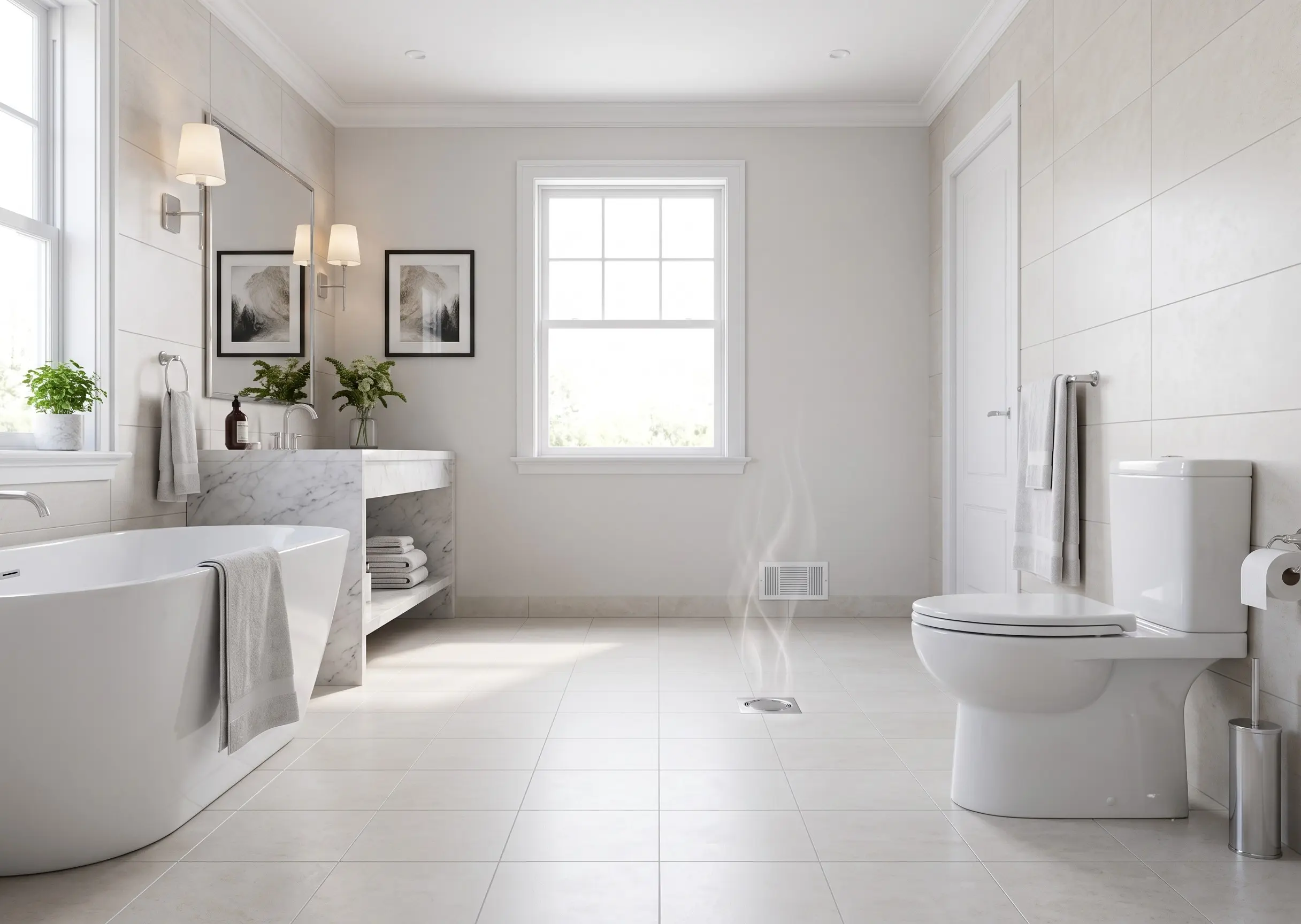
You walk into your bathroom and there it is again, that musty, sewage-like odor you can’t quite place. Below, we break down exactly what’s behind that smell and how to clear it for good. Here’s what you’ll find:
- The real cause of most bathroom odors, from dry P-traps to hidden mold
- Quick fixes you can try today, no plumber required
- The warning signs that mean it’s time to call a professional
- Simple habits that keep the smell from coming back
Let’s find out where that smell is really coming from.
Why Bathrooms Smell More in Dubai Than Elsewhere
The local climate works against your bathroom from two directions at once. Constant air conditioning keeps indoor humidity low, which means the water sitting inside your P-trap (the U-shaped pipe under every sink, shower, and floor drain) evaporates faster than it would in a humid climate. Once that trap runs dry, there’s nothing left to block sewer gas from rising back up into the room. A two to three week holiday is often enough to dry out several traps in a villa or apartment at once.
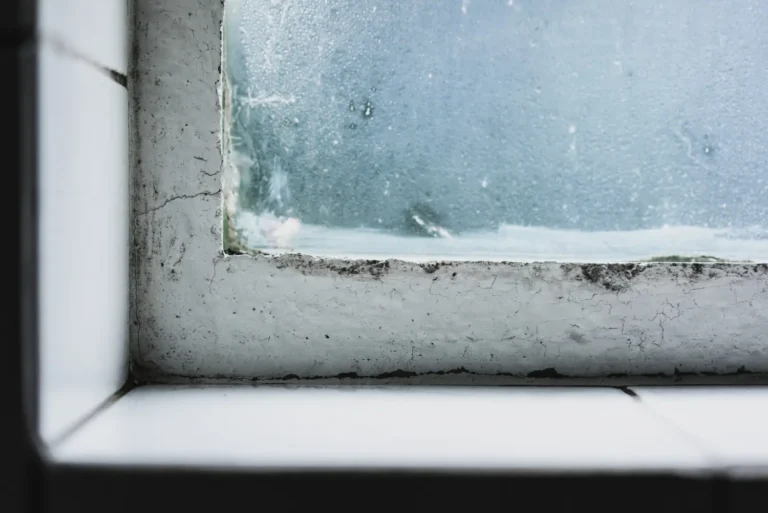
At the same time, the same humidity swings feed mold growth in grout lines, silicone seals, and poorly ventilated corners, while heavy AC use and limited airflow give bacteria in drains and condensation lines plenty of moisture to thrive on. So Dubai homes deal with odor from both ends: dryness in unused plumbing and dampness everywhere else.
The Most Common Causes of Bathroom Odor
- Dry P-trap: unused drains lose their water seal, letting sewer gas escape.
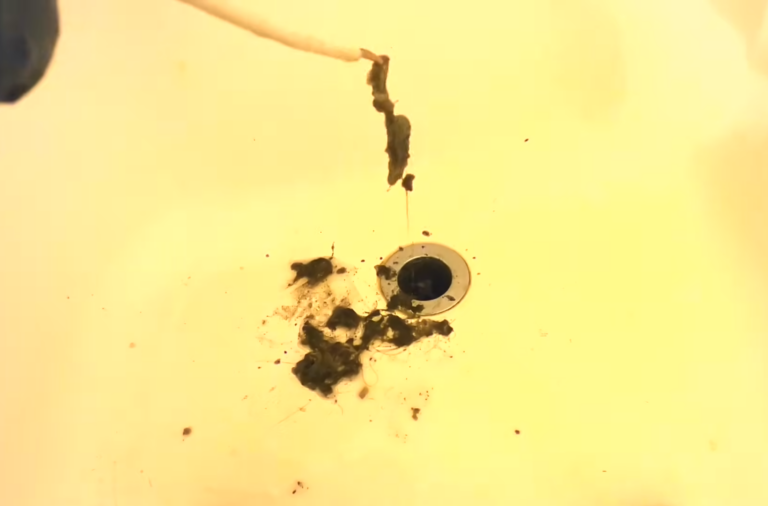
- Clogged or slow drains: hair, soap scum, and organic debris build up and rot inside the pipe, creating a sour smell.
- Mold and mildew: grows quickly on grout, tile edges, and under silicone joints in humid conditions, producing a musty odor.
- Worn toilet wax seal: a cracked seal at the base of the toilet lets sewage odor leak directly into the room.
- Poor ventilation: a weak or dusty exhaust fan can’t clear moisture, so odors and damp air linger.
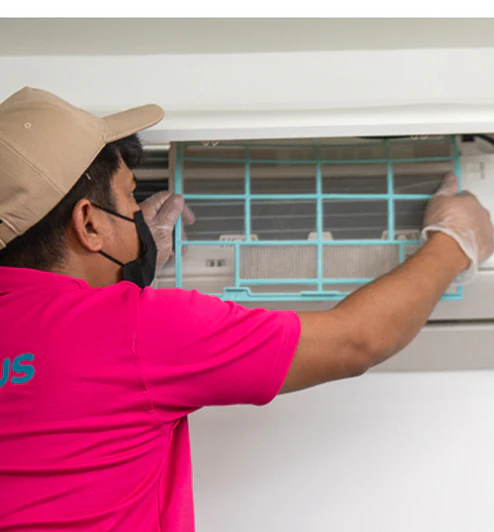
- AC condensation drains: these often connect near bathroom plumbing and can dry out or leak, adding a stagnant smell of their own.
Identifying which of these applies to your bathroom matters, because each one needs a different fix. Match your symptom to the right cause below.
Quick Fixes You Can Try Today
Smell only in an unused or guest bathroom? That points to a dry P-trap. Run water in the sink, shower, and floor drain for one to two minutes to refill it. If you’ve just come back from a trip, do this in every bathroom, not just the one you use daily.
Smell gets stronger near the shower or sink drain? That’s usually buildup, not a dry trap. Pour half a cup of baking soda down the drain, followed by half a cup of vinegar. Let it sit for thirty minutes, then flush with hot water to break down the bacteria and debris causing it.
Smell is musty rather than sewage-like? Check for mold around the toilet base, under the vanity, and along silicone joints. A diluted bleach solution or a dedicated mold cleaner will handle light growth, but recurring mold usually points to a hidden leak.
Bathroom always feels damp or stuffy? Poor ventilation is likely the cause. Turn on your exhaust fan every time you shower and leave it running for fifteen minutes after. If your bathroom has no window, this fan is doing all the work of clearing moisture, so a dusty or underpowered one needs cleaning or replacement.
None of the above match? Check the toilet base for a worn wax seal, or listen for gurgling near an AC condensation line. Both are common, easy to miss, and worth ruling out before you assume the worst.
When the Smell Means Something More Serious
Some causes need a professional, not a bottle of vinegar. Watch for these signs:
- The odor returns within days of cleaning.
- Drains gurgle or drain slowly alongside the smell.
- Mold keeps coming back to the same spot after cleaning.
- The smell spreads beyond the bathroom into hallways or bedrooms.
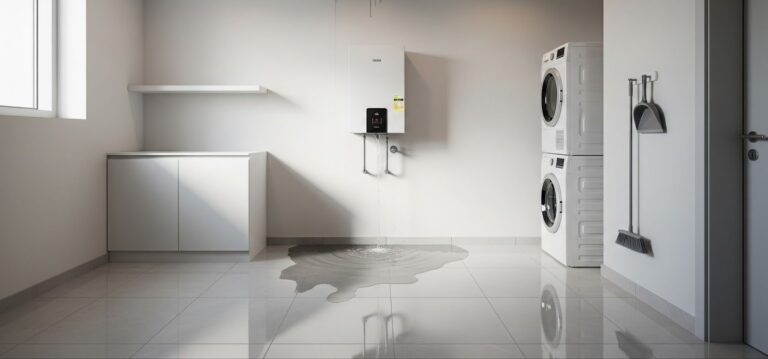
These usually point to a damaged sewer vent, a cracked pipe, a failing wax seal, or a leak hidden inside a wall. Trying to mask this kind of smell with air fresheners only delays a fix that gets more expensive the longer it’s ignored. A proper inspection from a professional plumber can pinpoint the exact source.
If mold has already spread into the walls or under fittings, patching over it won’t solve the underlying moisture problem. The leak feeding it needs to be found and fixed first, which is a plumbing job, not a cleaning one.
If the water damage has already ruined the tiles, drywall, or flooring underneath by the time it’s caught, that’s when a bathroom renovation becomes necessary to remove and rebuild the affected sections properly.
Preventing Bathroom Smell Long Term
Once the current odor is gone, a few habits keep it from coming back:
- Run water through every drain in the house at least once a week, especially in guest bathrooms.
- Clean drain covers and shower traps monthly to stop hair and soap buildup before it starts.
- Keep your exhaust fan clean and running during and after every shower.
- If your water itself smells off, the source might not be the bathroom at all. Sediment or bacteria buildup inside your home’s water tank can carry odor through every tap in the house, which is where water tank cleaning makes a real difference.
- Small jobs like replacing a worn toilet seal, resealing silicone joints, or fixing a dripping tap are easy to overlook until they cause bigger problems. Octopus’s handyman services can handle these before they turn into odor sources.
For homeowners who’d rather not track all of this manually, an Annual Maintenance Contract covers regular plumbing checks, drain servicing, and early leak detection, so odors get caught before they start.
The Bottom Line
Bathroom smells almost always come down to one of a few things: a dry P-trap, buildup in the drains, mold from poor ventilation, a worn toilet seal, or an AC condensation line. Start with the quick fixes above. If the smell keeps returning, gurgling drains or spreading odor are your signal to call in a professional before a small plumbing issue becomes a bigger repair.




 AC Maintenance & Repair
 AC Replacement / Installation
 AC Duct Cleaning
 AC Coil Cleaning
 Annual Maintenance Contracts
 Water Tank Cleaning
 Plumbing
 Electrical
 Handyman
 Home Renovation