Quick Answer
The most common cause for the AC breaker tripping is an overworked compressor drawing excess current during peak summer heat. Turn the AC off, wait 30 minutes, reset the breaker once, then restart. If it trips again, stop resetting and call a licensed AC technician.
When a circuit breaker trips, it is doing exactly what it was designed to do: protect your wiring and compressor from damage. One trip is a warning. Repeated trips are a diagnosis. In peak summer, the combination of temperatures regularly exceeding 45°C, dusty air, and AC units running 16 or more hours a day creates conditions that make breaker trips more common than most homeowners expect.
Below are the six causes responsible for the vast majority of breaker trips on residential AC units, along with what to do about each one.
The 6 Causes And What To Do
1. Overworked Compressor Drawing Excess Current
The compressor is the largest current draw in any AC system. When summer temperatures stay extreme for weeks, a compressor running continuously for 16 or more hours raises its internal temperature and electrical resistance until it draws more amperage than the circuit is rated for. The breaker trips to prevent wire damage or fire.
What to do
Ensure the outdoor condenser unit has at least 60 cm of clear space on all sides. If the compressor trips the breaker within minutes of restarting, do not reset again. Repeated resets without diagnosis burn the compressor windings, turning an AED 200 repair into an AED 3,000 replacement.
2. Condenser Coils Clogged With Desert Sand
Shamal winds deposit fine desert sand across outdoor condenser units throughout summer, and general dust and debris build up year-round. This layer acts as insulation, blocking the heat exchange that the coils are designed to do. The trapped heat forces the compressor to draw more current, and the breaker trips.
What to do
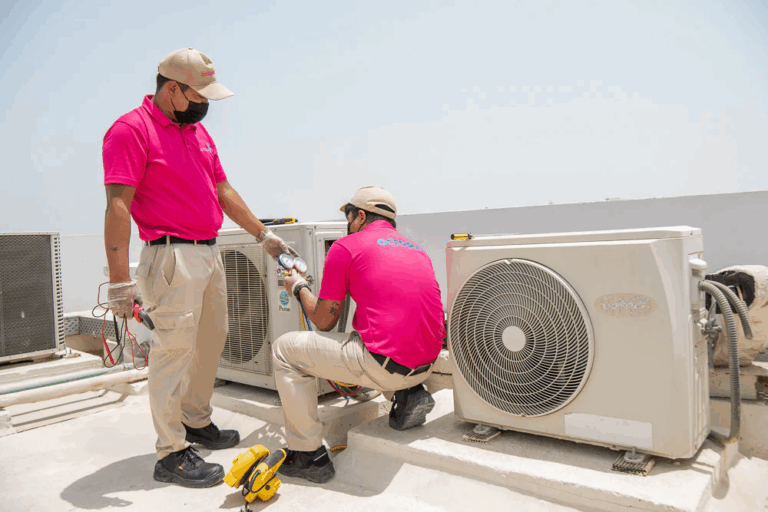
Schedule a condenser coil cleaning twice a year: once before summer (March or April) and once mid-season (July). A quick rinse with a garden hose is not sufficient. The fins need a proper coil-cleaning solution and a soft fin brush to remove compacted sand.
3. Clogged Air Filter Starving the Evaporator Coil
The dust load clogs air filters significantly faster than the 3-month intervals printed on most filter packaging. A blocked filter cuts return airflow to the evaporator coil. With insufficient airflow, the coil freezes, airflow drops to near zero, and the compressor overloads.
What to do
During summer, inspect the air filter every four to six weeks. Replace or wash it before it reaches 50% visible grey coverage. For villas with multiple units, a monthly inspection schedule is more practical than per-unit tracking.
4. Frozen Evaporator Coil From Low Refrigerant
Low refrigerant levels, caused by a slow leak in the refrigerant circuit, drop the evaporator coil temperature below the dew point. The coil freezes solid. As ice builds up and airflow collapses, the compressor overloads and trips the breaker.
What to do
Turn the AC off and set the fan to run-only for two to three hours to thaw the coil. If it freezes again after thawing, you have a refrigerant leak. Under UAE environmental regulations, only licensed refrigerant handlers may recharge AC systems. Do not attempt this yourself.
5. Degraded Capacitor Forcing Continuous Startup Current
Capacitors provide the brief high-current surge that starts the compressor and fan motors. A degraded capacitor forces the motor to draw startup-level current continuously instead of for a fraction of a second, overloading the circuit. Capacitor degradation is accelerated in Dubai by voltage fluctuations common on residential DEWA supply circuits.
What to do
A technician can test a capacitor with a multimeter in under five minutes and replace it for AED 80 to 200. Do not attempt this yourself. Capacitors retain a lethal voltage charge even after the power is disconnected.
6. Breaker or Wiring Undersized for the AC Unit
Many older homes were wired before the current generation of 2.5-ton and 3-ton inverter AC units became standard. If the breaker rating printed on the switch is lower than the minimum circuit ampacity shown on your AC unit’s nameplate, the breaker will trip under normal load. UAE Wiring Regulations, aligned with IEC 60364 and enforced by DEWA, require breaker and cable ratings to match the connected load.
What to do
If your wiring or breaker panel is over 10 years old and you have recently installed a larger AC unit, have a professional electrician check that the circuit rating matches the unit’s nameplate. This is a safety requirement, not optional maintenance.
When to Stop Resetting?
Reset the breaker once. If the AC trips again during the same cooling session, stop. Repeatedly resetting a tripping breaker risks burning compressor windings, overheating wiring insulation, and in worst cases starting an electrical fire inside the wall cavity.
Common Questions
Is it safe to reset a tripped AC breaker myself?
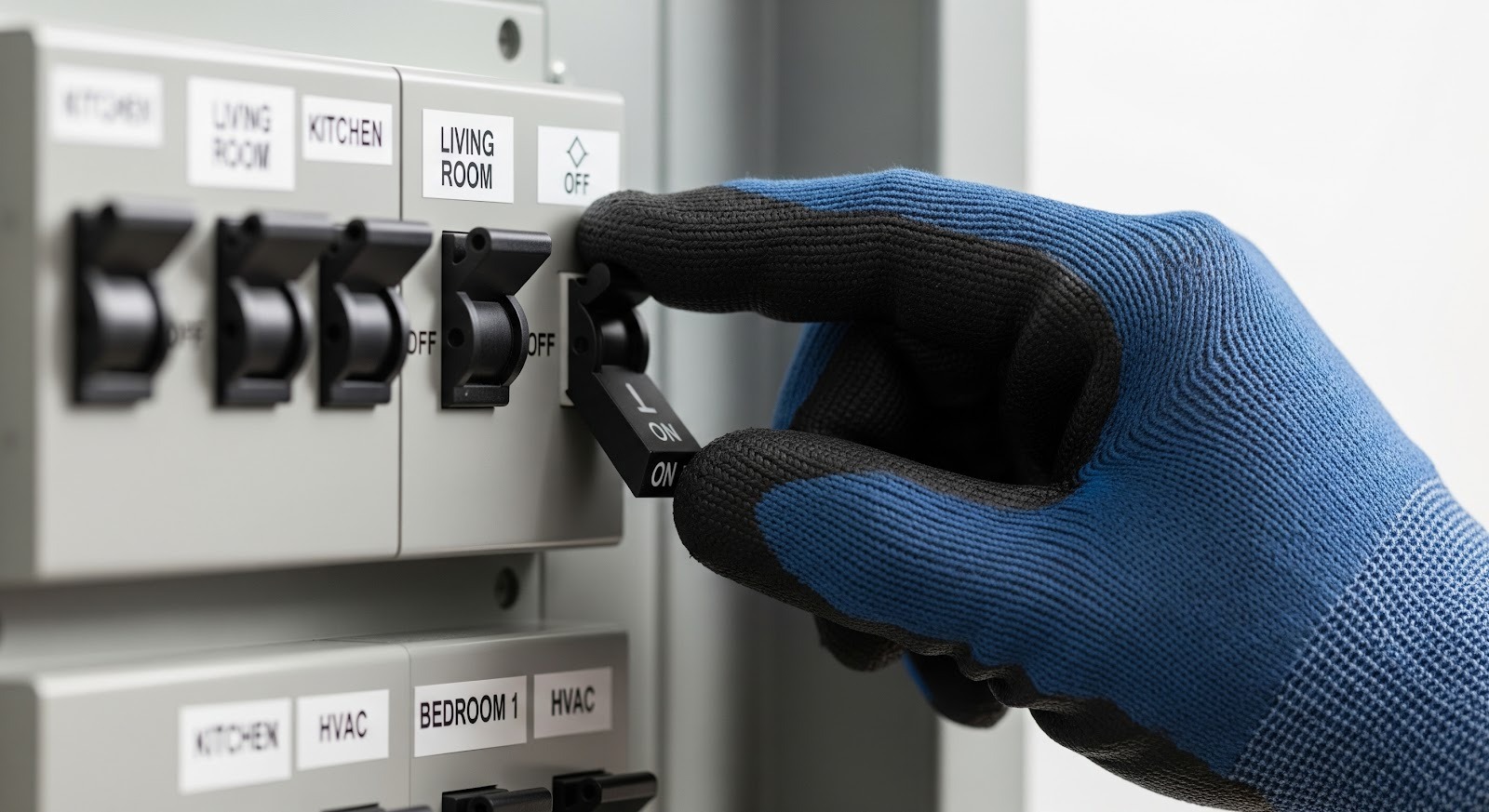
Yes, once. Switch the AC off at the thermostat first, wait 30 minutes to let the compressor pressure equalise, then reset the breaker. If the breaker trips again during the same session, do not reset it a second time.
Why does my AC only trip the breaker in summer and not in winter?
Extreme summer temperatures force the compressor to operate at or near its maximum rated load for extended periods. During milder months (October to March), the same system runs at 50 to 60% capacity, well within the circuit’s rated limit. The same underlying fault such as dirty coils or a weak capacitor goes undetected in cooler weather and surfaces in summer when the load peaks.
How often should an AC be serviced to prevent breaker trips?
Annual maintenance is the general recommendation for residential units. However, twice-yearly servicing gives better protection: once before summer for coil cleaning and refrigerant check, and once mid-summer for filter and electrical component inspection.