

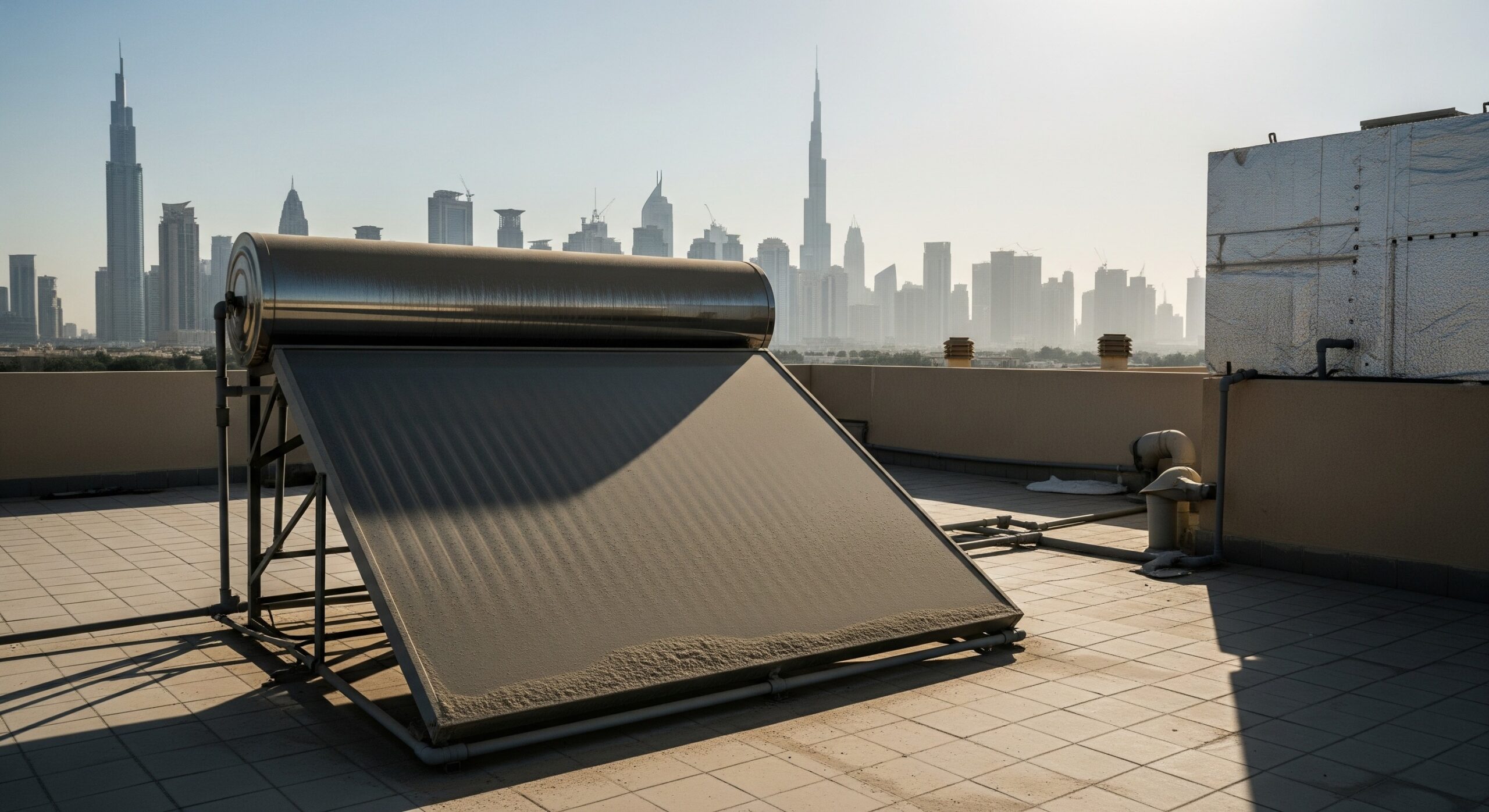
Ever wondered how Dubai’s dust affects your solar water heater’s performance? With the city’s frequent dust storms and fine sand in the air, buildup on solar panels is almost unavoidable. Over time, that layer of dust blocks sunlight, reducing your system’s efficiency and increasing energy use. Even a thin film can cut performance by 20–30%!
Regular cleaning and maintenance aren’t just about appearance, they’re key to keeping your water heater working efficiently year-round. In this article, we’ll explore how dust impacts solar systems, the signs your panels need cleaning, and easy ways to keep your solar water heater performing at its best.
How Dubai’s Dust Affects Solar Water Heater Performance
Dubai’s desert climate, characterized by frequent sandstorms and high levels of airborne dust, can significantly impact the efficiency and lifetime of solar water heaters. While these systems offer a sustainable and energy-efficient way to heat water, the accumulation of dust on solar panels can reduce their effectiveness and lead to increased maintenance costs. Here’s how dust affects solar water heaters and how to mitigate its impact:
1. Reduced Solar Energy Absorption
Dust and sand particles that accumulate on the surface of solar collectors can block sunlight, reducing the amount of solar energy absorbed. This leads to lower heat transfer efficiency, meaning the system requires more time and energy to heat the water. In extreme cases, dust buildup can decrease the system’s performance by up to 30% or more, especially during the hotter months when energy demand is high.
2. Increased Maintenance and Cleaning Requirements
Due to the high levels of dust and particulate matter in Dubai’s atmosphere, regular cleaning of the solar panels is essential to maintain their performance. Without regular cleaning, the panels become covered in a layer of dirt, which can cause energy inefficiency and, over time, potential damage to the system. Cleaning the panels every 1–2 months, particularly after sandstorms, ensures optimal energy output.
3. Panel Wear and Tear
Sand and dust particles can also cause abrasion on the surface of solar panels, leading to physical damage and degradation over time. This erosion can reduce the lifespan of the system, causing higher repair costs and eventual replacement. Proper maintenance, such as gentle cleaning techniques and protective coverings, helps prevent such damage.
4. Slower Heating Time
The accumulation of dust on solar panels affects the heat transfer efficiency, causing longer heating times. During peak usage hours in the winter, when the demand for hot water is highest, a dusty panel might struggle to deliver sufficient hot water, causing inconvenience and an increased reliance on backup heating systems.
Signs Your Solar Water Heater Needs Cleaning Due to Dust Buildup
Decreased Hot Water Supply
One of the first signs that your solar water heater needs cleaning is a noticeable decrease in hot water supply. When dust accumulates on the panels, it reduces their efficiency, leading to less heat being absorbed and, consequently, less hot water being produced.
This decrease in hot water supply can be frustrating, especially in a city like Dubai where hot water is often a necessity. Regular cleaning of the panels can help restore the system’s efficiency and ensure a consistent supply of hot water.
Longer Heating Times
Another indication of dust buildup is longer heating times. If you notice that your solar water heater is taking longer than usual to heat water, it may be due to dust obstructing the panels. The dust layer reduces the panels’ ability to absorb sunlight, leading to extended heating periods.
Addressing this issue promptly by cleaning the panels can help improve the system’s performance and reduce energy consumption. Regular maintenance is key to ensuring that your solar water heater operates efficiently.
Visible Dust Layer on Panels
A visible dust layer on the panels is a clear sign that cleaning is needed. This layer not only affects the aesthetic appearance of the panels but also significantly impacts their performance. The dust blocks sunlight, reducing the panels’ efficiency and energy output.
Regular inspections and cleaning can help prevent the buildup of dust and maintain the efficiency of your solar water heater. Keeping the panels clean ensures that they can absorb maximum sunlight and operate at optimal levels.
- Decreased hot water supply
- Longer heating times
- Visible dust layer on panels
The Science Behind Dust’s Effect on Solar Water Heaters
Light Scattering and Reflection
Dust particles on solar panels cause light scattering and reflection, which reduces the amount of sunlight that reaches the photovoltaic cells. This scattering effect diminishes the panels’ ability to convert sunlight into energy, leading to decreased efficiency.
The impact of light scattering is significant, as it directly affects the energy output of the solar water heater. Understanding this phenomenon is crucial for developing strategies to mitigate the effects of dust on solar panels.
Thermal Insulation Properties of Dust
Dust has thermal insulation properties that can hinder the performance of solar panels. When dust accumulates on the panels, it creates an insulating layer that prevents heat from being absorbed efficiently. This insulation effect reduces the panels’ ability to heat water effectively.
Addressing the thermal insulation properties of dust is essential for maintaining the efficiency of solar water heaters. Regular cleaning and maintenance can help mitigate the impact of dust and ensure optimal performance.
Quantifying Performance Loss from Dust Accumulation
Efficiency Reduction Percentages
Dust accumulation on solar panels can lead to a significant reduction in efficiency. Studies have shown that even a small layer of dust can reduce the panels’ efficiency by up to 30%. This reduction can have a substantial impact on the performance of solar water heaters.
Understanding the efficiency reduction percentages is crucial for assessing the impact of dust on solar panels. By quantifying the performance loss, solar water heater owners can make informed decisions about cleaning and maintenance.
Energy Output Decline Over Time
The energy output of solar panels declines over time as dust accumulates. This decline can be gradual, but it can lead to significant energy losses if not addressed promptly. Regular cleaning and maintenance are essential for preventing a decline in energy output.
By monitoring the energy output of solar panels, owners can identify when cleaning is needed and take action to restore the system’s efficiency. This proactive approach can help ensure that solar water heaters operate at optimal levels.
Financial Impact of Reduced Performance
The financial impact of reduced performance due to dust accumulation can be significant. As the efficiency of solar panels decreases, energy consumption increases, leading to higher energy bills. Additionally, the reduced lifespan of the solar water heater can result in costly repairs or replacements.
Understanding the financial impact of reduced performance is important for making informed decisions about cleaning and maintenance. By investing in regular cleaning, solar water heater owners can save money in the long run and ensure the sustainability of their systems.
- Efficiency reduction percentages
- Energy output decline over time
- Financial impact of reduced performance
Effective Cleaning Methods for Dust-Affected Solar Water Heaters
Professional Cleaning Services
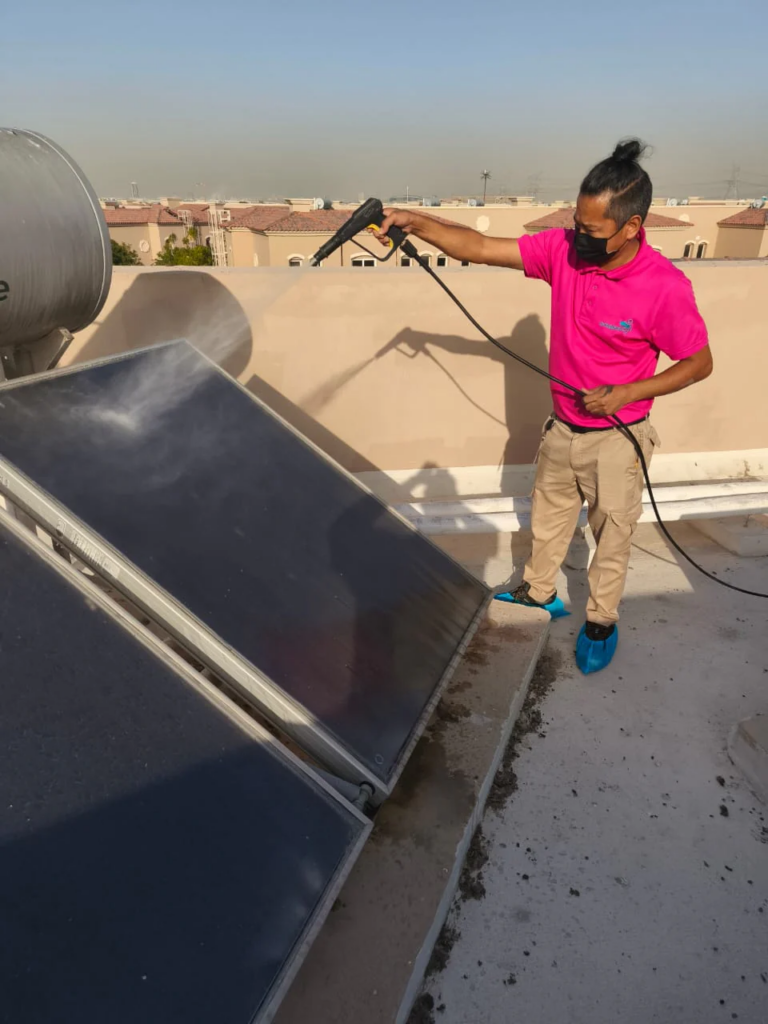
Professional cleaning services offer a reliable solution for maintaining the efficiency of solar water heaters. These services use specialized equipment and techniques to remove dust and debris from the panels, ensuring optimal performance.
Hiring professional solar water heater cleaning services can be a worthwhile investment, as they provide thorough cleaning and maintenance. This approach can help extend the lifespan of the solar water heater and ensure consistent energy output.
DIY Cleaning Techniques
For those who prefer a hands-on approach, DIY cleaning techniques can be effective for maintaining solar panels. Using a soft brush or cloth, owners can gently remove dust and debris from the panels, ensuring that they remain clean and efficient.
DIY cleaning techniques require regular attention and care to ensure that the panels are not damaged during the cleaning process. By following proper cleaning methods, owners can maintain the efficiency of their solar water heaters.
Frequency of Cleaning Recommendations
The frequency of cleaning solar panels depends on the level of dust accumulation and environmental conditions. In a city like Dubai, where dust is prevalent, regular cleaning is essential for maintaining the efficiency of solar water heaters.
Experts recommend cleaning solar panels at least once every three months to ensure optimal performance. By adhering to this schedule, owners can prevent dust buildup and ensure that their systems operate efficiently.
- Professional cleaning services
- DIY cleaning techniques
- Frequency of cleaning recommendations
Innovative Technologies to Combat Dust Accumulation
Self-Cleaning Solar Panels
Self-cleaning solar panels are an innovative solution to combat dust accumulation. These panels are designed with special coatings that repel dust and debris, reducing the need for manual cleaning. This technology ensures that the panels remain clean and efficient, even in dusty environments like Dubai.
The use of self-cleaning solar panels can significantly reduce maintenance costs and improve the overall performance of solar water heaters. By investing in this technology, owners can ensure the sustainability of their systems.
Hydrophobic Coatings
Hydrophobic coatings are another effective solution for preventing dust accumulation on solar panels. These coatings create a water-repellent surface that prevents dust and debris from adhering to the panels. This technology helps maintain the efficiency of solar water heaters by ensuring that the panels remain clean and free of dust.
The application of hydrophobic coatings can be a cost-effective way to enhance the performance of solar water heaters. By reducing the need for frequent cleaning, these coatings can help extend the lifespan of the system.
Electrostatic Dust Repulsion Systems
Electrostatic dust repulsion systems use electrical charges to repel dust and debris from solar panels. This technology creates an electrostatic field that prevents dust from settling on the panels, ensuring that they remain clean and efficient.
The use of electrostatic dust repulsion systems can significantly improve the performance of solar water heaters in dusty environments. By preventing dust accumulation, these systems help maintain optimal energy output and reduce maintenance costs.
- Self-cleaning solar panels
- Hydrophobic coatings
- Electrostatic dust repulsion systems
Maintenance Tips to Minimize Dust Impact
Regular Inspections
Regular inspections are crucial for minimizing the impact of dust on solar water heaters. By routinely checking the panels for dust accumulation and damage, owners can identify issues early and take corrective action. This proactive approach helps maintain the efficiency and longevity of the system.
Conducting regular inspections can also help identify other potential issues, such as loose connections or damaged components. By addressing these problems promptly, owners can ensure that their solar water heaters operate at optimal levels.
Protective Covers During Sandstorms
Using protective covers during sandstorms is an effective way to prevent dust accumulation on solar panels. These covers shield the panels from dust and debris, ensuring that they remain clean and efficient. By using protective covers, owners can reduce the need for frequent cleaning and maintenance.
Protective covers are a cost-effective solution for maintaining the efficiency of solar water heaters in dusty environments. By investing in these covers, owners can ensure the longevity and performance of their systems.
- Regular inspections
- Proper panel positioning
- Protective covers during sandstorms
Final Thoughts
Dubai’s dusty climate may be beautiful at sunset, but it’s tough on your solar water heater. Even a thin layer of dust can block sunlight, reduce heating efficiency, and drive up energy costs. That’s why regular cleaning and maintenance aren’t optional here; they’re essential. Whether you do it yourself or hire professionals, keeping your panels dust-free ensures consistent hot water, lower bills, and a longer system lifespan.
And if you want an easier long-term solution, consider self-cleaning panels or hydrophobic coatings, smart upgrades built for Dubai’s desert conditions. Clean panels mean more sunlight, more savings, and better performance all year round.



 AC Maintenance & Repair
 AC Replacement / Installation
 AC Duct Cleaning
 AC Coil Cleaning
 Annual Maintenance Contracts
 Water Tank Cleaning
 Plumbing
 Electrical
 Handyman
 Home Renovation