Dubai, with its stunning skyscrapers and luxurious lifestyle, is a city that attracts people from all over the world. However, living in this vibrant metropolis comes with its own set of challenges, one of which is dealing with hard water. Hard water problems in Dubai are a common concern for residents, particularly when it comes to plumbing.
Don’t let hard water wreak havoc on your plumbing system. At Octopus, we offer a one-stop solution for all your home maintenance needs. With a 4.9-star rating by thousands of Dubai residents, we ensure your home runs smoothly. Contact us today for plumbing services in Dubai.
Understanding Hard Water
Hard water is water that contains high levels of dissolved minerals, primarily calcium and magnesium. These minerals are picked up by water as it travels through soil and rock. While hard water is not harmful to health, it can cause significant issues for plumbing systems.
Why is Hard Water Prevalent in Dubai?
The natural water sources in the UAE, including Dubai, are rich in minerals, making hard water a widespread issue. Additionally, desalination processes used to provide fresh water can sometimes fail to remove all mineral deposits, exacerbating the problem.

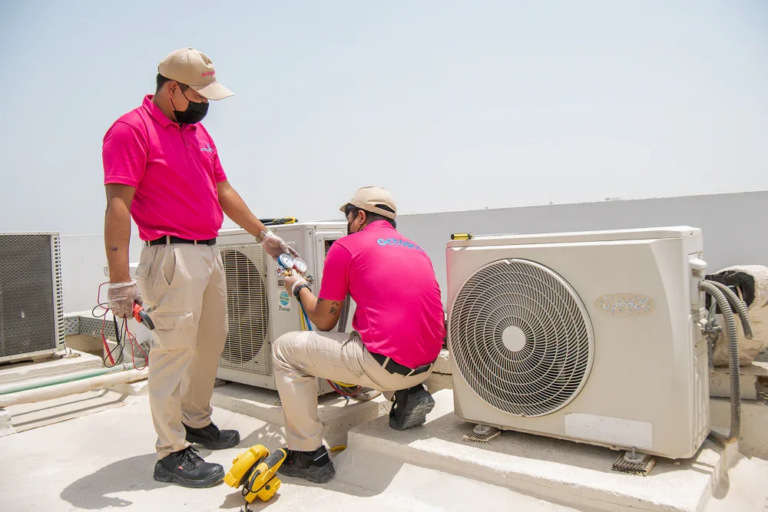
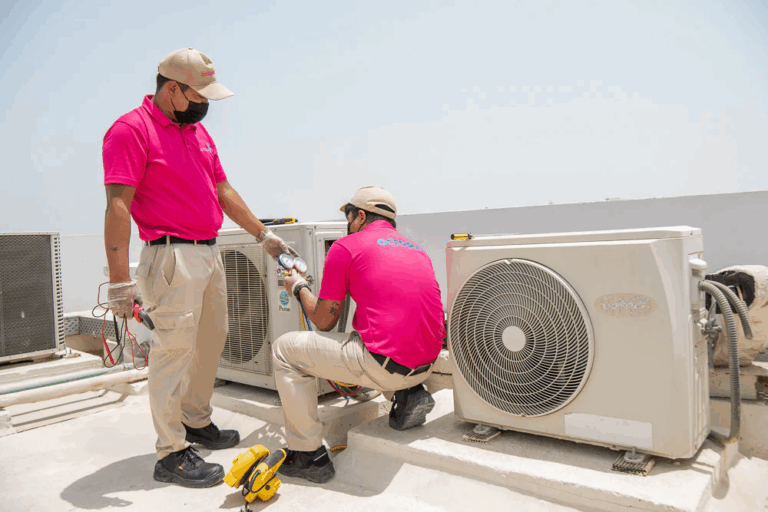
Fast & Reliable AC Service at Your Doorstep
Whether it’s a routine checkup or an urgent repair, our AC service ensures that your system is always working at peak performance. Let us handle the technical stuff while you stay cool.
Effects of Hard Water on Plumbing
Hard water can wreak havoc on plumbing systems in several ways. Let’s delve into the specifics:
Limescale Buildup in Pipes
How Does Limescale Form?
Limescale is a chalky deposit that forms when the calcium and magnesium in hard water react with heat. This buildup can occur in pipes, reducing water flow and increasing pressure on your plumbing system.
- Reduced Water Flow: Limescale narrows the diameter of pipes, leading to decreased water pressure.
- Increased Energy Costs: Appliances must work harder to function, leading to higher energy consumption.
- Frequent Repairs: The added strain on your system can lead to more frequent plumbing repairs.
Mineral Deposits in Water Lines
Identifying Mineral Deposits
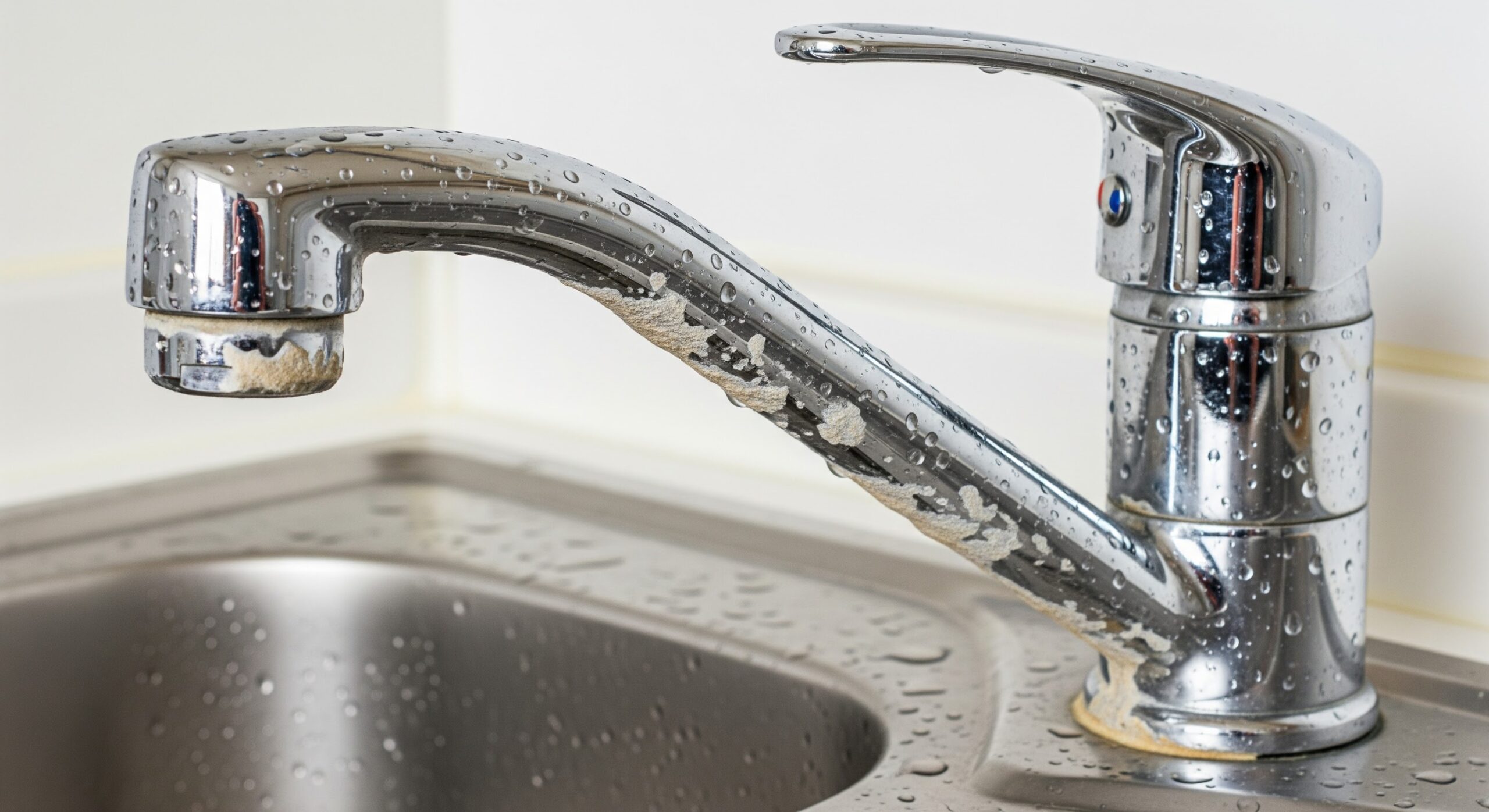
Mineral deposits can form on various components of your plumbing system, including faucets, showerheads, and valves. These deposits can cause clogs and reduce the efficiency of your fixtures.
- Clogged Aerators: Mineral buildup can block the small openings in faucet aerators, reducing water flow.
- Damaged Valves: Deposits can cause valves to stick, leading to leaks or reduced water pressure.
Signs of Hard Water Damage to a Plumbing System
Hard water contains high levels of minerals like calcium and magnesium. Over time, these minerals build up inside pipes, fixtures, and appliances, causing damage that often goes unnoticed until bigger problems appear. Here are the most common signs your plumbing system is being affected by hard water:
1. White, Chalky Buildup on Faucets and Fixtures
A clear indicator is the presence of white or off-white mineral deposits on taps, showerheads, and sink fixtures. This buildup (limescale) forms when mineral-rich water evaporates and leaves residue behind.
Why it matters:
Limescale reduces water flow and puts stress on faucet components, leading to leaks and costly repairs.
2. Reduced Water Pressure
Hard water creates mineral blockages inside pipes, showerheads, and aerators. Over time, this restricts water flow and causes inconsistent or weak pressure.
Why it matters:
Low pressure is often the first sign of internal pipe scaling.
3. Clogged or Slow Draining Pipes
Mineral deposits can accumulate inside drain lines, causing frequent clogs and slow drainage in sinks, bathtubs, and showers.
Why it matters:
Ignoring drain buildup can lead to pipe corrosion or complete blockages.
4. Shortened Lifespan of Water-Using Appliances
Hard water is harsh on appliances like:
- Water heaters
- Dishwashers
- Washing machines
Mineral deposits settle inside these systems, causing overheating, reduced efficiency, and premature failure.
Why it matters:
A water heater running on hard water often fails years earlier due to heavy sediment buildup.
5. Rust-Colored or Cloudy Water
When minerals mix with metals inside the plumbing system, corrosion occurs. This can make water appear:
- Brownish
- Cloudy
- Metallic-smelling
Why it matters:
Discolored water often signals corrosion-related pipe damage.
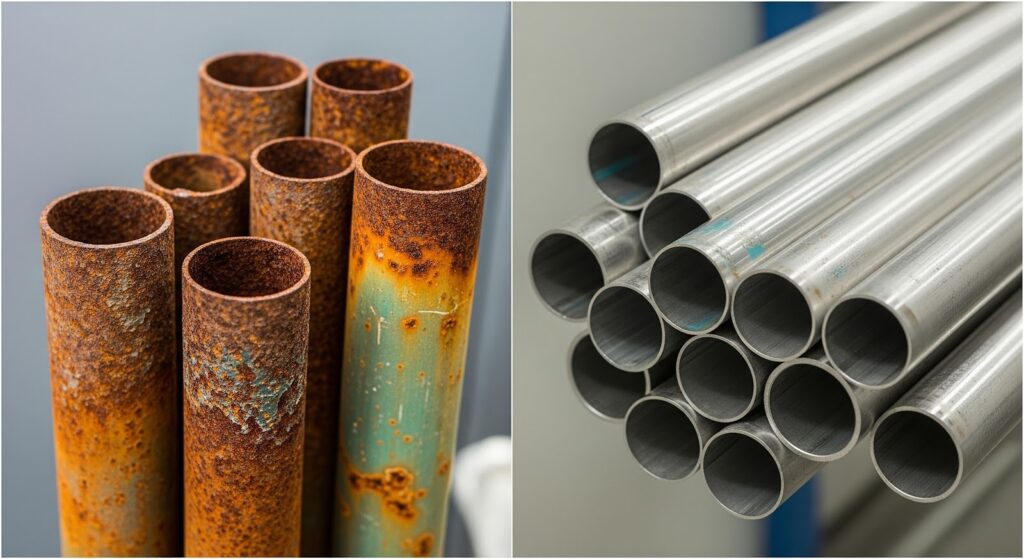
6. Frequent Leak Repairs
Mineral deposits can corrode pipe joints and fittings, leading to recurring leaks in older plumbing systems.
Why it matters:
Small leaks can quickly escalate into major water damage if hard water is not addressed.
Plumbing Repairs Caused by Hard Water
Hard water can lead to a range of plumbing issues that require professional intervention:
- Pipe Replacements: Severe limescale buildup may necessitate replacing entire sections of piping.
- Fixture Repairs: Mineral deposits can damage faucets and showerheads, requiring repair or replacement.
- Water Heater Maintenance: Hard water can reduce the efficiency of your water heater, leading to frequent breakdowns.
The costs associated with repairing hard water damage can add up quickly. Regular maintenance and early intervention can help minimize expenses.
Preventing Limescale Buildup
Water Softening Solutions
One of the most effective ways to combat hard water is by using a water softener. These devices work by replacing calcium and magnesium ions with sodium or potassium ions, reducing the hardness of the water.
- Types of Water Softeners: Salt-based, salt-free, magnetic, and electronic softeners.
- Choosing the Right System: Consider factors such as water hardness level, household size, and budget.
Regular Maintenance Practices
Regular maintenance is key to preventing limescale buildup:
- Descale Appliances: Regularly clean appliances to remove mineral deposits.
- Inspect Plumbing: Schedule routine plumbing inspections to identify and address issues early.
Final Thoughts
Hard water is a prevalent issue in Dubai, causing significant damage to plumbing systems. Limescale buildup and mineral deposits are common problems that reduce efficiency and increase repair costs. Regular maintenance and the use of water softeners can mitigate the effects of hard water. At Octopus, we offer expert solutions to help you manage hard water problems effectively.
FAQ
Q: How can I tell if I have hard water in my home?
A: Common signs include soap scum, dry skin, and stained fixtures. A professional water test can confirm hardness levels.
Q: Is hard water harmful to my health?
A: No, hard water is not harmful to health, but it can cause plumbing and appliance issues.
Q: How often should I descale my appliances?
A: It depends on your water hardness level, but typically every 3-6 months.