Choosing the right flooring for your Dubai home or business goes beyond aesthetics. Dubai’s extreme climate, scorching summers reaching 50°C, humidity exceeding 90%, and constant sand exposure, demands flooring materials specifically engineered for these harsh conditions. The wrong choice leads to warping, cracking, fading, and costly premature replacement.
Quality climate-appropriate flooring maintains its appearance, performs reliably for decades, and provides year-round comfort. This guide explores proven flooring options that withstand Dubai’s heat, humidity, and environmental challenges, helping you protect your investment and enhance your property.
Flooring Options That Perform Best in Dubai’s Hot and Humid Climate
Porcelain and Ceramic Tiles for Heat and Moisture Resistance
Why tiles dominate Dubai flooring:
- Stay naturally cool underfoot even during 45°C+ summers
- 100% moisture resistant, no warping or swelling in humidity
- Sand and dust wipe away without scratching surfaces
- Zero expansion/contraction with temperature changes
- Last 25-30+ years with minimal maintenance
Porcelain vs. Ceramic performance: Porcelain absorbs virtually no water (less than 0.5%), making it ideal for indoor and outdoor use including poolside areas and balconies. Ceramic absorbs slightly more (3-7%) and works excellently indoors but isn’t recommended for exterior applications.
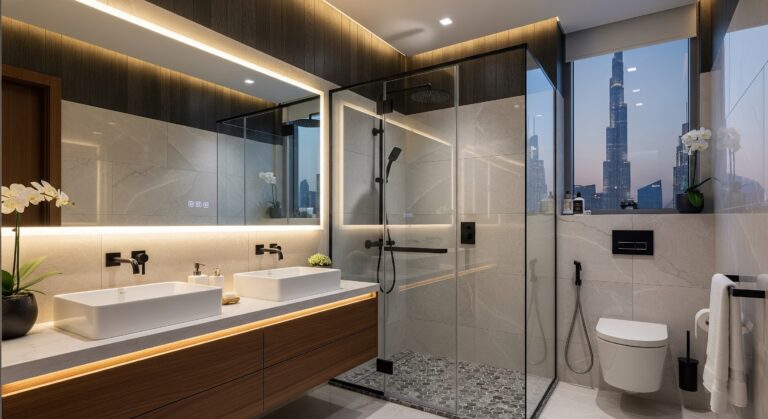
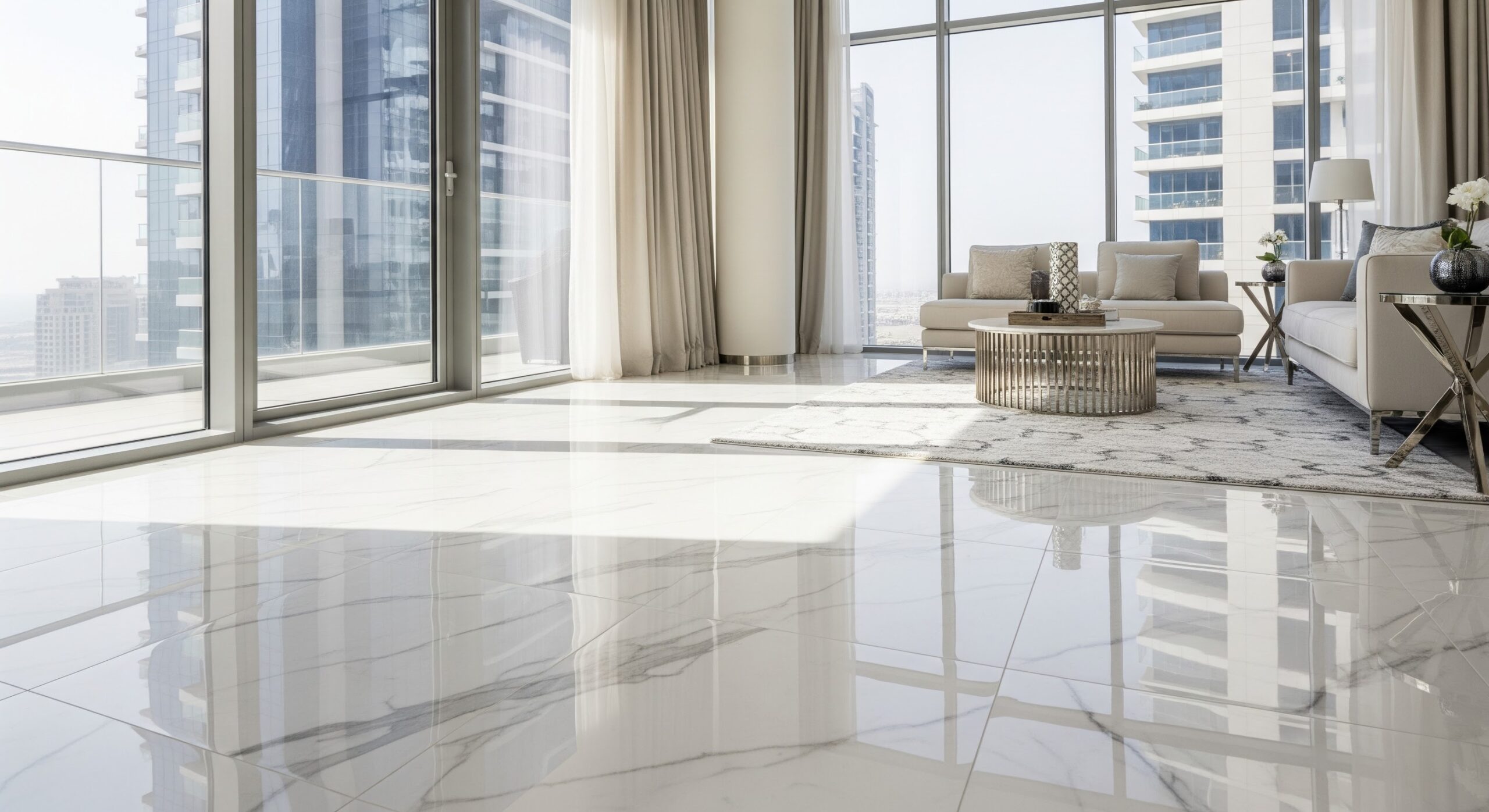
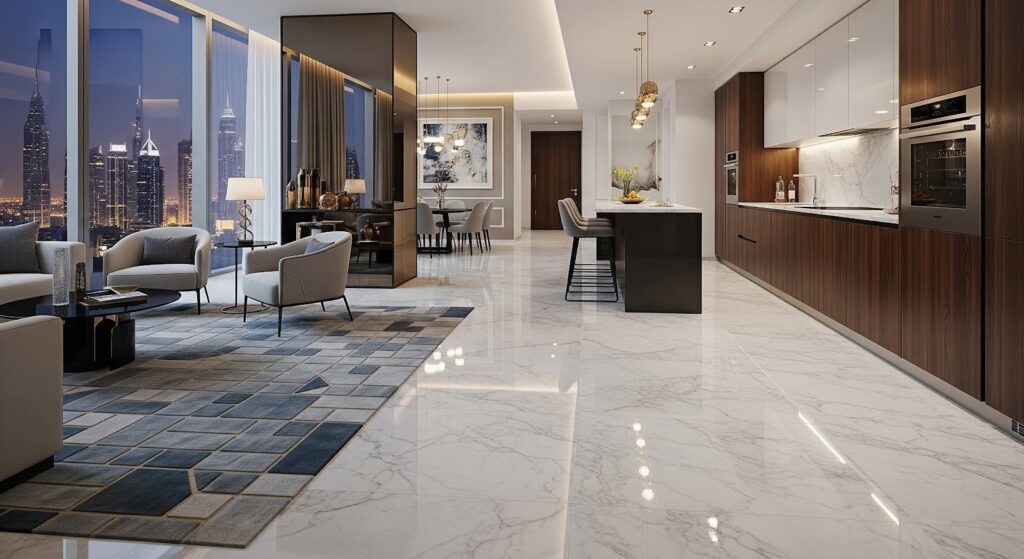
Design options: Modern tiles replicate any aesthetic, wood-look planks, marble veining, concrete finishes. Large-format tiles (60x120cm) create seamless contemporary looks. Smaller mosaics add decorative bathroom accents.
Maintenance: Regular sweeping and occasional mopping keeps tiles looking new. Seal grout lines annually for light colors. No refinishing, special cleaners, or professional maintenance needed.
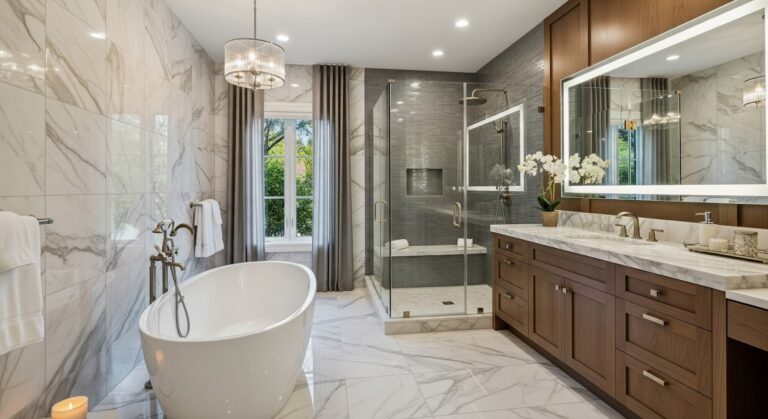
Marble and Natural Stone Flooring for Dubai Homes
Best stone types for Dubai:
- Marble: Most popular for elegance and natural cooling
- Granite: Extreme durability for high-traffic areas
- Limestone: Softer tones but requires more maintenance
- Travertine: Rustic aesthetic, needs careful sealing
Climate performance: Stone stays naturally cool, major comfort advantage in Dubai heat. Dense material resists temperature fluctuations. However, stone is porous and needs regular sealing (annually or bi-annually) to prevent moisture penetration and staining.
Maintenance requirements: Acidic substances etch marble and limestone. Use pH-neutral cleaners only. Professional polishing every 3-5 years maintains glossy finishes. More care than porcelain but delivers timeless luxury.
Best applications: Formal living areas, entryways, bedrooms. Avoid kitchens unless prepared for diligent maintenance. Use sealed granite in high-traffic zones.
Vinyl Flooring That Handles Humidity and Temperature Changes
Why modern vinyl works in Dubai:
- 100% waterproof, ideal for moisture-prone areas
- Dimensionally stable through temperature fluctuations
- Comfortable, cushioned surface stays cooler than wood
- Faster, less expensive installation than tile
Quality matters: Choose commercial-grade luxury vinyl planks (LVP) or tiles (LVT) with 12-20 mil wear layers. Rigid core vinyl (SPC/WPC) offers superior stability versus flexible vinyl. Products must be rated for high traffic and temperatures up to 60°C.
Aesthetic versatility: Convincingly replicates wood, stone, marble, concrete at fraction of the cost. Wood-look vinyl provides warmth without moisture sensitivity. Stone-look delivers elegance without weight or maintenance.
Installation options: Click-lock floating installations work well. Glue-down provides maximum stability for heavy furniture areas. Requires completely level subfloor—vinyl shows imperfections readily.
Limitations: Not for outdoor areas or intense direct sunlight—UV causes fading. Heavy furniture can dent lower-quality products. Sharp objects may puncture surfaces.
Engineered Wood Flooring Suitable for Dubai Climate
Why engineered beats solid wood: Layered construction, real wood veneer over plywood core, resists expansion/contraction far better than solid wood. Cross-grain layers counteract natural wood movement with humidity changes, preventing warping and gaps.
Quality specifications:
- Thick wear layers (3-6mm) allow refinishing
- Multi-ply cores (7-9 layers) provide superior stability
- Choose moisture-resistant species: oak, teak, walnut
- Avoid soft woods like pine that dent easily
Installation requirements: Float over moisture barriers. Never install in bathrooms or areas with standing water risk. Maintain indoor humidity 35-55% using AC. Requires consistent climate control.
Maintenance needs: Sweep/vacuum regularly to remove scratching sand. Damp-mop occasionally with wood cleaners, never wet-mop or steam clean. Address spills immediately. Refinish when wear layer shows significant scratching (1-3 times possible).
Climate limitations: Requires consistent AC. Homes with humidity fluctuations will experience problems. Direct sunlight fades, use UV-protective treatments. Not suitable for outdoor or semi-outdoor areas.
Flooring Materials to Avoid in Dubai’s Extreme Weather
Solid Hardwood: Expands and contracts dramatically with humidity fluctuations, creating gaps in dry periods and cupping during humidity. Even with AC, typically develops problems within 2-5 years. Investment rarely justified.
Laminate Flooring: Fiberboard cores swell with moisture exposure. Even “water-resistant” versions fail in bathrooms or areas with AC condensation. Shorter 7-10 year lifespan doesn’t justify savings versus quality vinyl.
Wall-to-Wall Carpet: Traps dust and allergens difficult to remove. Humidity creates mold and dust mite growth. Retains odors and stains. Requires professional cleaning every 6-12 months. Most homes limit to bedrooms only.
Bamboo: Despite eco-friendly marketing, responds poorly to humidity. Lower-quality products warp and delaminate. Only strand-woven with proven humidity resistance, expect mixed results.
Cork: Absorbs moisture readily, expands significantly, deteriorates in high humidity. Fades badly under UV exposure. Unsuitable for Dubai conditions.
Key Features to Look for in Climate-Resistant Flooring
Moisture resistance: Porcelain absorbs less than 0.5%, quality vinyl is 100% waterproof, sealed stone resists well. Check manufacturer specifications.
Dimensional stability: Materials must resist expansion/contraction. Tiles and stone completely stable. Quality vinyl and engineered wood adequate. Solid wood fails.
Heat resistance: Must withstand 60°C without degradation. Tiles and stones excel. Quality vinyl handles heat well. Wood needs climate control.
UV resistance: Porcelain doesn’t fade. Stone fades minimally. Vinyl and wood need UV-protective window treatments.
Scratch resistance: Tile and stone resist sand abrasion. Quality vinyl with thick wear layers performs well. Wood scratches easily.
Easy cleaning: Non-porous surfaces like tile and vinyl wipe clean effortlessly. Stone needs pH-neutral cleaners. Wood requires gentle care.
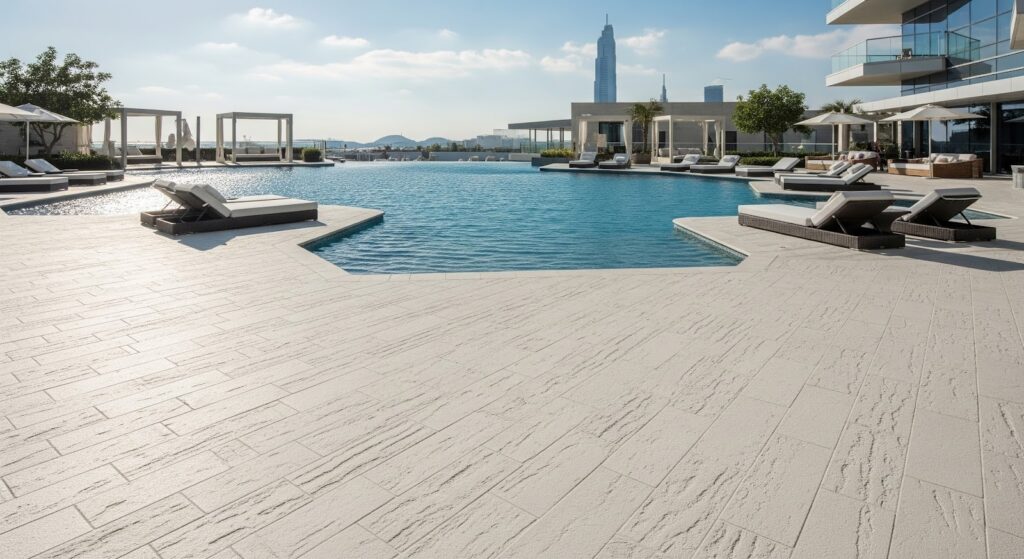
How Dubai’s Climate Affects Flooring Lifespan
Temperature fluctuations: Extreme swings between AC interiors (22-24°C) and outdoor heat (40-50°C) stress materials. Tiles/stone last 25-30+ years. Vinyl lasts 15-20 years. Wood-based products: 10-15 years even with climate control.
Humidity effects: Dubai humidity varies from 30% to 90%+, causing wood expansion/contraction, gaps, and cupping. Tiles and stone unaffected. Quality vinyl maintains stability.
UV degradation: Intense sunlight fades many materials. Tiles don’t fade. Stone shows minimal change. Vinyl and wood require window treatments.
Wear from sand: Desert sand acts like sandpaper, shortening lifespan of wood, laminate, and budget vinyl. Hard tiles resist wear for decades.
Expected lifespans:
- Porcelain/ceramic tiles: 25-30+ years
- Natural stone (maintained): 20-30+ years
- Quality vinyl: 15-20 years
- Engineered wood (climate controlled): 12-18 years
- Solid hardwood: 5-10 years (with problems)
- Laminate: 7-12 years
- Carpet: 5-8 years
Common Flooring Mistakes to Avoid in Dubai Climate
Installing solid hardwood: Most common expensive mistake. Almost always develops gaps, cupping, warping. Even luxury hardwood rarely justifies 3-4x cost premium over engineered alternatives.
Skipping subfloor preparation: Uneven subfloors crack tiles, show through vinyl. Proper leveling and moisture barriers essential but frequently rushed.
Choosing based on price alone: Budget materials fail prematurely. Replacing cheap vinyl after 5-7 years costs more than installing quality lasting 15-20 years.
Inadequate stone sealing: Natural stone requires sealing before installation and regular resealing. Skipping allows moisture absorption, staining, deterioration.
Ignoring expansion gaps: All flooring needs gaps at walls. Without proper gaps, materials buckle when expanding, particularly wood and vinyl during humidity.
Poor grout selection: Wrong grout types or neglecting sealing leads to stained, deteriorating lines. Use epoxy grout in wet areas, seal cement grout regularly.
Installing without climate control: Installing before AC activation causes materials to acclimate to humidity then contract when AC operates, creating gaps.
Choosing the Right Flooring Supplier and Installer in Dubai
Choosing the right flooring in Dubai is not just about selecting a material, it’s about working with a supplier and installer who understand local conditions, quality standards, and long-term performance. At Octopus, we help you make the right choice from day one, so your flooring looks good and lasts longer.
Verify supplier reputation: Work with established suppliers carrying quality brands with warranties. Check reviews and request references. Visit showrooms to see actual products.
Confirm product specifications: Request technical specs confirming Dubai climate suitability. For vinyl, verify wear layer thickness and temperature ratings. For tiles, confirm absorption rates.
Installer experience matters: Choose installers with proven Dubai experience. Request photos of completed projects and references. Licensed contractors provide recourse if problems occur.
Warranty coverage: Understand what warranties cover and duration. Product warranties cover manufacturing defects. Installation warranties should cover workmanship 1-2 years minimum.
Installation timing: Schedule when AC is operational and maintaining consistent humidity. Avoid extreme weather periods if possible.
Get detailed quotes: Request itemized quotes covering materials, installation, subfloor prep, moisture barriers, trims, cleanup. Compare total costs, not just material prices.
At Octopus, we believe flooring should be done once and done right. We help you avoid common flooring issues and deliver results that stand up to Dubai’s climate. Speak to our team to choose flooring solutions you can rely on with confidence.
Final Thoughts
Selecting climate-appropriate flooring is one of your property’s most important decisions. While cheaper materials tempt initially, long-term performance, maintenance, and replacement cycles make quality flooring the smarter investment.
Porcelain tiles offer unmatched Dubai performance,perfect heat resistance, moisture impermeability, and decades of maintenance-free durability. Quality vinyl provides excellent value with similar climate benefits at moderate cost. Engineered wood delivers natural beauty with better stability than solid wood but requires climate control. Natural stone creates luxury but demands ongoing maintenance.
Avoid solid hardwood, standard laminate, and wall-to-wall carpet, these rarely justify costs given poor Dubai performance. When uncertain, choose harder, more durable materials.
Work with reputable suppliers and experienced installers understanding Dubai’s challenges. Proper installation equals material importance, even best flooring fails if installed incorrectly.
Your flooring affects daily comfort, maintenance costs, and property value for decades. Choose based on Dubai’s climate realities rather than trends alone. Right flooring enhances your environment while protecting your investment for years.
FAQs
What is the best flooring for Dubai climate?
Porcelain tiles offer best overall performance, resisting heat, moisture, and sand perfectly while lasting 25-30+ years with minimal maintenance. Quality luxury vinyl provides excellent value as cost-effective alternative with similar benefits.
Can I install hardwood floors in Dubai?
Solid hardwood isn’t recommended, humidity fluctuations cause warping, cupping, gaps. Engineered wood performs better but requires consistent climate control. Most homes achieve better results with porcelain wood-look tiles or luxury vinyl planks replicating wood aesthetics without moisture sensitivity.
How often should I seal marble floors in Dubai?
Seal marble annually in Dubai’s humid climate. High-traffic or light-colored marble may need sealing twice yearly. Use quality penetrating sealers designed for natural stone.
Is vinyl flooring good for Dubai apartments?
Yes, quality luxury vinyl (LVP/LVT) works excellently, 100% waterproof, resists humidity and temperature changes, stays cooler than wood, costs less than tile. Choose commercial-grade with thick wear layers (12-20 mil).
What flooring stays coolest in Dubai heat?
Porcelain and ceramic tiles stay coolest underfoot. Natural stone (marble, granite) also remains naturally cool. These don’t retain heat like wood or carpet.
How long does flooring last in Dubai climate?
Porcelain/ceramic: 25-30+ years. Quality vinyl: 15-20 years. Maintained stone: 20-30+ years. Engineered wood (climate controlled): 12-18 years. Solid hardwood, laminate, carpet: 5-10 years due to climate damage.