High indoor humidity is one of the most overlooked comfort problems in Dubai homes. You may notice sticky air, damp smells, foggy windows, or even mold spots, despite your air conditioner running all day. Many homeowners assume humidity comes only from the weather outside. In reality, your AC system itself may be causing or worsening the problem.
Dubai’s climate, especially during the summer months, creates a unique challenge for air conditioning systems. When AC units are incorrectly sized, poorly maintained, or improperly configured, they can actually increase indoor moisture instead of removing it.
This article explains how air conditioning affects humidity in Dubai homes, why AC systems sometimes fail to control moisture, and what you can do to restore healthy indoor humidity levels.
Does Air Conditioning Increase or Decrease Humidity?
Air conditioning should reduce indoor humidity, but in many Dubai homes, it fails to do so effectively. In some cases, it can even increase humidity levels.

Breathe Easier with Clean Air!
Ensure the air you breathe is fresh and healthy with our professional AC cleaning services. We remove dirt, dust, and allergens for a cleaner, healthier environment at home or work.
Keep Your AC Running Smoothly
Don’t wait for a breakdown! Regular maintenance and quick repairs can extend the life of your AC and keep it running efficiently, saving you money on energy bills.
Fast & Reliable AC Service at Your Doorstep
Whether it’s a routine checkup or an urgent repair, our AC service ensures that your system is always working at peak performance. Let us handle the technical stuff while you stay cool.
A properly functioning air conditioner removes moisture from the air as it cools. However, when the system is oversized, poorly maintained, or not designed for humid climates, it cools rooms too quickly without removing enough moisture. This leaves the air cool but damp.
Reasons Your Home AC Is Causing High Humidity in Dubai
High indoor humidity in Dubai homes is usually not caused by the weather alone. In most cases, the air conditioning system is not removing moisture properly. This happens due to sizing issues, poor airflow, incorrect settings, clogged air filters, malfunctioning evaporator coils, or lack of humidity control features.
Below are the most common reasons why AC systems create or worsen humidity problems in Dubai, along with clear solutions for each.
Oversized AC Units That Cool Too Fast
An oversized air conditioner is one of the most common reasons for high humidity in Dubai villas and apartments.
When an AC unit is too powerful for the space, it cools the room quickly and shuts off before enough moisture is removed from the air. This results in short cooling cycles that reduce dehumidification.
What you may notice:
- The room feels cold but sticky
- Clothes and bedding feel damp
- Humidity remains high even at low temperatures
Solution:
- Have an HVAC professional perform a proper load calculation
- Replace oversized units with correctly sized systems
- Use variable-speed AC units that run longer at lower power
- Avoid setting extremely low temperatures to compensate
Clogged Air Filters
Dirty or clogged air filters restrict airflow, causing the AC to struggle in dehumidifying the air efficiently. This leads to excess moisture buildup in your home.
Solution:
- Clean air filters every 2-3 Months, especially during peak summer months.
- Use high-quality filters to improve air circulation and filtration.
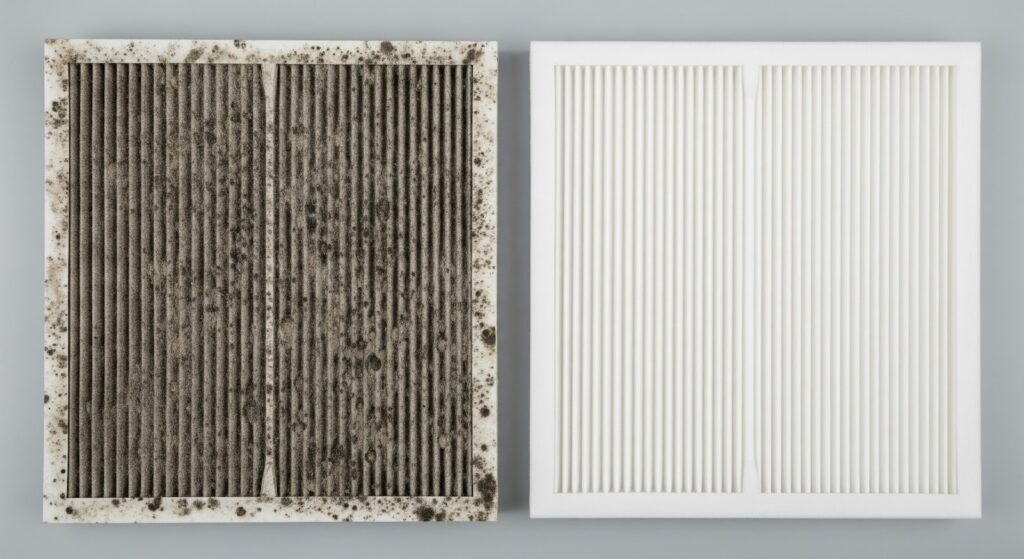
Malfunctioning Evaporator Coils
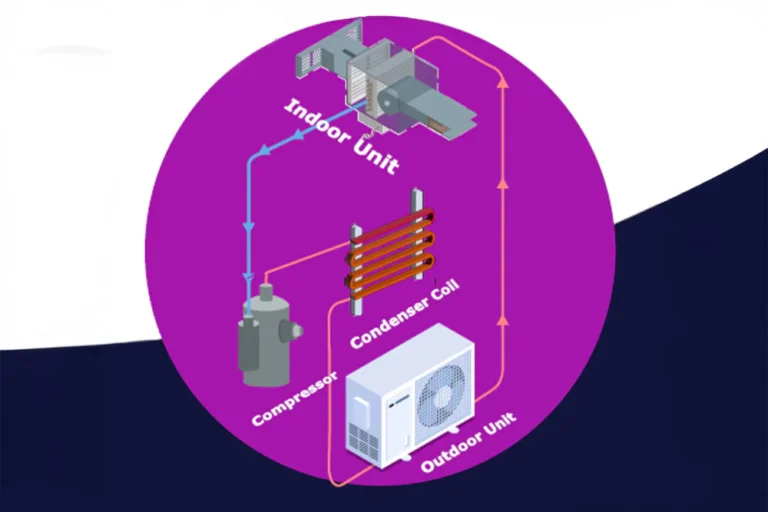
The evaporator coils inside your AC unit absorb heat and humidity from the indoor air. If these coils are dirty or frozen, they cannot effectively remove moisture, leading to increased humidity levels.
Solution:
- Schedule regular AC maintenance to ensure the evaporator coils are clean and functioning properly.
- If you notice ice forming on the coils, contact a professional technician immediately.
Short AC Cycles That Do Not Remove Moisture
Air conditioners need sufficient runtime to remove humidity.
When AC cycles are too short, moisture does not condense properly on the cooling coil. Instead, it stays suspended in the air.
What you may notice:
- AC turns on and off frequently
- No improvement in humidity levels
- Discomfort despite continuous cooling
Solution:
- Adjust thermostat settings to avoid rapid cycling
- Ensure AC capacity matches room size
- Upgrade to inverter or variable-speed systems
- Avoid frequent manual on and off adjustments
Poor Airflow Across the Cooling Coil
Restricted airflow reduces the AC’s ability to remove moisture. Dirty filters, blocked vents, or poorly designed ductwork prevent humid air from passing evenly across the evaporator coil. This limits condensation and moisture removal.
What you may notice:
- Uneven cooling across rooms
- Heavy or stale indoor air
- Certain areas feel more humid
Solution:
- Clean AC filters regularly
- Ensure supply and return vents are unobstructed
- Inspect ductwork for blockages or leaks
- Schedule annual airflow balancing
Blocked or Faulty Condensate Drainage
Air conditioners remove moisture and drain it away through a condensate line. When this drain is blocked or improperly installed, moisture can re-enter the indoor air instead of being discharged outside.
What you may notice:
- Musty or damp smells
- Water stains near AC units or walls
- AC feels humid even while cooling
Solution:
- Inspect and clean condensate drain lines
- Ensure proper drain slope and insulation
- Install drain line traps where required
- Schedule routine AC maintenance
Incorrect Thermostat and Fan Settings
Improper AC settings can worsen humidity problems. When the fan is set to “ON,” it continues blowing air after cooling stops. This pushes moisture back into the room from the coil.
What you may notice:
- Humidity increases after cooling cycles
- AC feels humid at night
- No lasting dryness
Solution:
- Set the fan mode to “AUTO”
- Avoid excessive temperature setbacks
- Use smart thermostats with humidity control
- Allow the system to complete full cycles
AC Systems Without Humidity Control Features
Many AC systems in Dubai are designed for cooling only, not humidity management. Basic fixed-speed units lack the ability to adapt to changing moisture levels, especially during humid months.
What you may notice:
- AC cools but never feels dry
- Humidity spikes during evenings
- Mold or dampness despite cooling
Solution:
- Upgrade to AC units with humidity control modes
- Install variable-speed compressors
- Use smart thermostats with humidity sensors
- Add a dedicated dehumidifier if needed
High Outdoor Humidity Entering the Home
Dubai’s climate adds a constant moisture load to indoor spaces. During summer and especially in August, outdoor humidity often exceeds comfortable levels. When humid air enters through doors, windows, or leaks, the AC must remove more moisture.
What you may notice:
- Humidity worse at night
- AC runs longer with little improvement
- Sticky air near entrances
Solution:
- Seal doors and windows properly
- Improve insulation and weather stripping
- Limit door opening during peak humidity
- Use entryway mats and air curtains if needed
Dubai Humidity Levels and Why They Matter Indoors
Outdoor humidity in Dubai is often high, especially near coastal areas. During summer, humidity can exceed 70 percent, particularly at night.
Is 77 Percent Humidity High?
Yes. Indoor humidity above 60 percent is considered high. At 77 percent, mold growth, dust mites, and moisture damage become likely.
When outdoor humidity enters the home and the AC fails to remove it properly, indoor air becomes heavy and unhealthy.
Weather in Dubai in August and Indoor Moisture
August is one of the most humid months in Dubai. Hot air holds more moisture, and night-time humidity often rises sharply.
During this period:
- AC systems run continuously
- Moisture load increases
- Poor humidity control becomes obvious
This is when many homeowners notice their AC is humid rather than dry.
Effects of High Indoor Humidity on Health
High humidity is not just uncomfortable. It can affect health.
Common Health Effects
- Nasal congestion
- Sinus irritation
- Increased allergies
- Breathing discomfort
- Fatigue and headaches
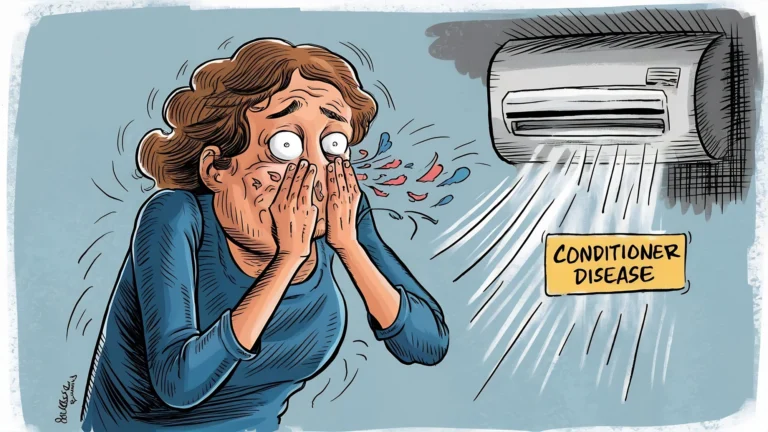
Many people ask whether you can get sick from air conditioning. In reality, poor humidity control is often the real issue, not the AC itself.
AC Moisture and HVAC Issues to Watch For
Moisture problems often indicate underlying HVAC issues.
Common HVAC-Related Causes
- Blocked condensate drains
- Dirty evaporator coils
- Poor insulation around ducts
- Incorrect fan settings
- Aging equipment
These issues allow moisture to build up instead of being removed.
How to Dehumidify a Room with AC?
Air conditioners can dehumidify effectively when configured correctly.
Steps That Help
- Set the fan to auto mode
- Avoid extremely low temperature settings
- Ensure proper airflow
- Clean AC filters regularly
- Check condensate drainage
These adjustments improve moisture removal without additional equipment.
When to Use a Dehumidifier in Dubai?
Sometimes, even a well working AC cannot keep humidity under control in Dubai. This is common in coastal areas, high rise apartments, and villas with strong AC systems that cool fast but do not run long enough to pull moisture out.
A dehumidifier becomes the smart add on when you want the room to feel dry, fresh, and comfortable, not just cold.
Clear Signs
Use a dehumidifier when:
- Humidity stays above 60 percent for most of the day.
This is the range where mold and dust mites grow faster. - Your AC cools quickly but the air still feels sticky.
This often points to an oversized unit or short cycling. - Walls or ceilings show mold spots or dark corners.
Humidity is feeding mold, especially in shaded areas. - You get frequent nasal congestion, allergies, or throat irritation indoors.
High humidity can worsen respiratory discomfort.
How To Use It Properly So It Actually Works
A dehumidifier helps most when it is used with the right setup:
- Close doors and windows in the room while it runs.
Otherwise, it keeps fighting incoming humid air. - Run it during peak humidity hours.
In Dubai, humidity is often worse at night and early morning. - Aim for 45 to 55 percent humidity indoors.
This range feels comfortable and reduces mold risk. - Empty the tank regularly or use a drain hose.
A full tank stops the unit from working. - Do not place it tight against a wall.
Leave space for airflow for better moisture capture.
A simple rule that saves time
If the room feels damp for more than a week, and your AC service is already done, a dehumidifier is not a luxury. It is a practical humidity control tool. It improves comfort, protects walls and furniture, and helps keep indoor air healthier during Dubai’s humid seasons.
Common Misconceptions About AC and Humidity
Many homeowners believe colder air means drier air. This is not always true.
Reality Check
- Cold air can still be humid
- Oversized AC units worsen humidity
- Continuous cooling does not equal dehumidification
- Proper system design matters more than power
Understanding these facts helps avoid costly mistakes.
Conclusion
High humidity in Dubai homes is often caused by the air conditioning system itself. Oversized units, poor maintenance, and lack of humidity control features prevent proper moisture removal. This results in humid indoor air, discomfort, and potential health issues.
Understanding how AC affects humidity allows homeowners to take corrective action. Whether through system adjustments, maintenance, or supplemental dehumidification, controlling indoor humidity is essential for comfort and health in Dubai’s climate.
FAQs
Does Air Conditioning Cause Nasal Congestion?
Air conditioning does not directly cause nasal congestion. Improper humidity levels do. Both very dry air and very humid air can irritate the nasal passages. High humidity encourages mold and bacteria growth, which worsens respiratory symptoms. Maintaining balanced humidity is essential.
Does air conditioning increase humidity?
It should not, but oversized or poorly maintained systems can cause humidity buildup.
Is high humidity common in Dubai homes?
Yes, especially during summer and in coastal areas.
What humidity level is too high indoors?
Anything above 60 percent is considered high.
Can an oversized AC cause humidity problems?
Yes. Short cycling prevents proper moisture removal.
Should I use a dehumidifier with AC in Dubai?
Yes, if humidity remains high despite proper AC operation.